Why “Buy Now” Isn’t Enough: Solving Late-Stage Architectural Bottlenecks in Cloud Marketplaces
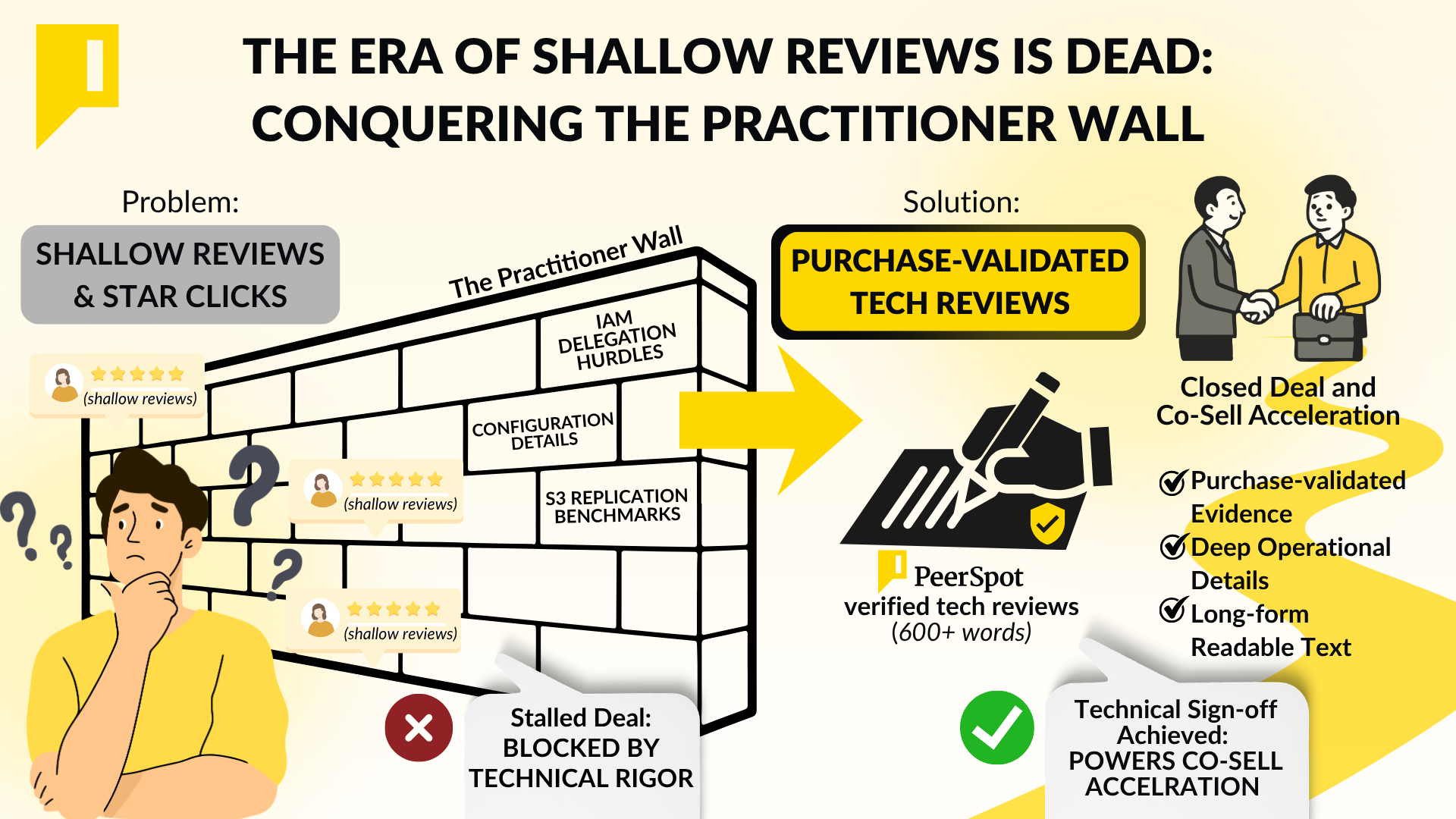

The board handed down the mandate: Burn down our cloud commit backlog. The enterprise procurement team found your solution on the AWS or Google Cloud Marketplace. The budget is approved, the private offer is ready, and your sales team is changing the CRM stage to “90% – Closing.”
Then, the deal stalls.
What happened? You hit the Practitioner Wall.
In our previous piece, Most Companies Still Think Cloud Marketplaces Are Procurement Infrastructure. That’s the Problem., we broke down how treating your listing as a mere billing portal blinds you to how enterprise buyers actually discover software. This is where that mistake exacts its highest toll.
While procurement loves the marketplace because it simplifies the legal and billing cycle, the engineering, security, and cloud architecture teams view it with intense skepticism. They aren’t looking at the price tag; they are looking at production risk.
When a late-stage architectural review hits a marketplace listing and finds nothing but high-level marketing copy and a few surface-level reviews saying “Great tool, saved us time!”, the process breaks down. Engineers don’t trust generic 5-star ratings. They need raw, technical “ground truth” to sign off on a deployment.
What Practitioners Are Actually Hunting For
Before a cloud architect allows your software into their production environment, they are trying to solve highly specific configuration riddles. If your marketplace listing doesn’t answer these questions natively, you force them to take the evaluation offline, killing your deal momentum:
- The Integration Reality: How does this tool actually behave when connected to native hyperscaler services like AWS S3 or Google BigQuery? Does it introduce unexpected latency under heavy workloads?
- The Onboarding Hurdle: What does the configuration look like? Are we going to run into IAM temporary delegation roadblocks or compliance hurdles during the initial setup?
- The Operational Trade-off: What are the real post-purchase support realities when a cluster fails at 2:00 AM?
Giving Engineers the Currency of Trust
To bypass the Practitioner Wall, you have to transform your marketplace listing from a billing box into a technical resource. This is exactly why the major cloud marketplaces overhauled their native feedback loops, with Google Cloud selecting PeerSpot as its exclusive engine to power in-marketplace reviews and Buyer Guides.
PeerSpot doesn’t capture surface-level sentiment. By utilizing structured, long-form reviews that average over 600 words, it provides the exact technical prose that architects demand:
- In-the-Trenches Specificity: PeerSpot reviews document real deployment roadblocks, specific SOC tuning requirements, and actual post-purchase configurations.
- AI-Driven Discovery: This depth does double duty. When enterprise architects use the marketplace’s new AI-powered conversational search modes to ask complex natural language questions (“Show me the tools that handle high-throughput multi-cloud data governance without dropping packets”), these detailed reviews provide the structured data signals that ensure your product is recommended.
Next Steps: Overcoming the Practitioner Wall
To stop late-stage marketplace deals from stalling, your marketing and alliance teams need to actively equip your listing for technical scrutiny:
- Audit Your Current Listing Data: Look at your marketplace page through the eyes of a Cloud Architect. If it contains only procurement instructions and high-level product sheets, you are exposed.
- Realign Your Review Persona: Stop asking only for high-level user sentiment. Direct your review acquisition toward the practitioners—the DevOps leads, Solutions Architects, and Security Engineers who can talk about implementation realities.
- Activate In-Marketplace Proof: Ensure you have at least 5 verified, long-form PeerSpot reviews on your listing to unlock native marketplace Buyer Guides, anchoring the technical proof directly where the transaction happens.
The Lesson: Stop treating your marketplace presence as just a checkout counter for procurement. Feed the engineers the technical ground truth they need to approve the architecture, and close your enterprise deals faster.